About Ryokan
What is a ryokan?
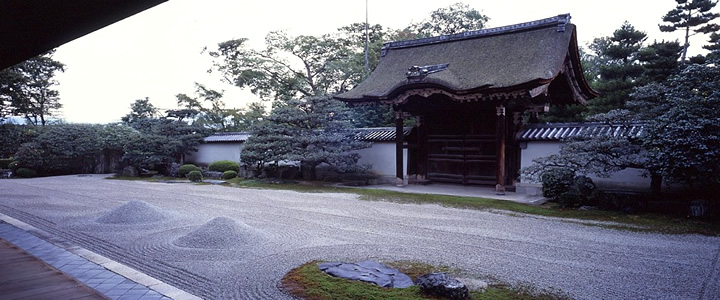
A ryokan is a traditional Japanese inn with tatami rooms, futon bedding, a Japanese bath and seasonal Japanese cuisine. Most ryokan are independent and family-run, so each has its own character. Yachiyo is a garden ryokan by Nanzen-ji Temple, established in 1915.
How is a ryokan different from a hotel?
At a ryokan you stay in a tatami room, sleep on futons laid out by the staff in the evening, wear a yukata and bathe in a Japanese bath. At Yachiyo, Kyoto kaiseki and hot pots are served at Ryotei Yachiyo (reservation required), with in-room dining from ¥3,300 extra per person; room-only and breakfast plans are also available. Hotels usually have Western beds, in-room showers and star ratings, while each ryokan is valued for its own character.
Check-in & Check-out
What are the check-in and check-out times?
Check-in is from 15:00 to 22:00 and check-out is by 11:00. If you will be arriving late, please let us know in advance.
Can I leave my luggage before check-in or after check-out?
Yes. We are happy to store your luggage at the front desk.
Can I borrow a bicycle?
Yes, for staying guests. We have 4 LOUIS GARNEAU cross bikes and 2 city bicycles. The first day of your stay is free; from the second day, JPY 2,000 per cross bike and JPY 1,000 per city bicycle per day (paid at the front desk). If you booked on our official website, the bicycles are free on every day of your stay. For safety reasons, we do not offer children’s bicycles or bicycles with child seats. Please book online – first come, first served. Kyoto also has many ports for LUUP, a shared electric-assist bicycle service (app: App Store / Google Play).
Dining
What meal plans are available?
You can choose room only, bed & breakfast (Bed and TOFU Breakfast Package), or a dinner package (kaiseki, wagyu sukiyaki, wagyu shabu-shabu, or a vegetarian / gluten-free hot pot). Please choose the one that suits your itinerary.
Is dinner included in my reservation?
It depends on your package. Some include breakfast and/or dinner; others are room only. Please check your booking confirmation, or contact us with the name on your reservation if you are unsure. Dinner packages may ask you to choose a menu and dining time in advance.
What dinner menus are available?
Prices are per person: Kyoto kaiseki ¥22,770; Wagyu beef sukiyaki or shabu-shabu ¥15,180; Wagyu beef steak ¥15,180; vegetarian hot pot ¥10,120; tofu hot pot ¥4,000; UGETSU BENTO Lunch Box ¥5,500; Kids Tempura Udon ¥2,530; Kids Sukiyaki ¥6,600; Kids Shabushabu ¥6,600. Other seasonal dishes and children's meals are also available. Menus and prices may vary by season and package; please choose your menu in advance.
Do I need to reserve dinner in advance?
Yes. So that every dish can be served freshly prepared, all dinners must be reserved in advance. Kyoto kaiseki must be reserved by the day before. Wagyu shabu-shabu, Wagyu sukiyaki, the vegetarian hot pot and the tofu hot pot can be booked on the day until 17:00, as long as ingredients are available. You may choose a start time between 17:00 and 19:30; the restaurant closes at 21:00.
Where is dinner served?
Dinner is usually served at our garden restaurant “Ryotei Yachiyo,” overlooking the garden. Wagyu shabu-shabu, tofu hot pot, vegetarian hot pot, Kyoto kaiseki, the UGETSU BENTO Lunch Box and Wagyu beef steak can also be served in your room for an additional ¥3,300 per person (depending on room type and availability). Wagyu sukiyaki is served at the garden restaurant only. All dinners must be reserved in advance.
What time is breakfast?
You may choose a start time of 7:30, 8:00, 8:30 or 9:00. Breakfast is ¥3,300 per person and can be added until 20:00 the day before (subject to availability).
Can you accommodate vegetarian or vegan diets?
Yes. Our vegetarian hot pot (¥10,120 per person) is tailored to lacto-ovo, lacto, ovo or vegan diets, and can be made gluten-free. Japanese cuisine often uses soy sauce, kombu and fish-based dashi stock, so when you book please tell us exactly which ingredients you avoid – for example meat, fish, fish dashi, eggs, dairy, gluten, soy or alcohol.
Can you accommodate allergies or religious dietary restrictions?
With advance notice, we will do our best to accommodate you. Please let us know which ingredients to avoid, including in dashi stock, seasonings and cooking sake. We may not be able to meet every request. We do not use halal-certified ingredients. In our Japanese kitchen, utensils are strictly managed by ingredient – meat, vegetables and every other ingredient. We can confirm where every ingredient was produced, and all cooking is done in our own kitchen, so you can enjoy Japanese cuisine with peace of mind. For guests who follow a halal diet, we offer our vegetarian hot pot only.
Rooms
Can I choose a specific room when booking?
Yes. You can choose your exact room by name from all 16 rooms when you book. Go to Choose your room by name to reach each room's booking page.
What is the difference between the HONKAN Main Building and the BEKKAN Annex Building?
Across our 16 rooms, the HONKAN Main Building and the BEKKAN Annex Building differ in layout, views, baths and architecture. Please read each room's description before booking.
Will I sleep on a bed or a futon?
In our Japanese-style rooms, futons are laid out on the tatami for the night. Some rooms also have beds. Our staff will prepare your futon in the evening.
What amenities are in the room?
Air conditioning, a TV or Apple TV, hair dryer, shampoo, conditioner, body soap, toothbrush, towels and yukata. Amenities vary by room type.
Is there Wi-Fi?
Yes. High-speed wireless internet is available free of charge in every guest room.
Which room has a sauna?
YUGIRI, our two-floor (maisonette) sauna suite in the HONKAN Main Building, has its own private steam sauna, renewed in August 2026. You can book it by name under Choose your room.
May I wear my yukata to meals?
Yes. There is no dress code.
Large Communal Bath & Private Bath
Is there a large communal bath?
Yes, for staying guests only (not open to visitors). The large communal bath is open 15:00–17:00, 22:00–24:00 and 6:30–10:00. From 17:00 to 22:00 it is reserved for private use, in 45-minute sessions (reservation required).
Can I book the private bath?
Yes. From 17:00 to 22:00, our two baths, Nanzen and Eikan, can be booked privately (hourly, 10 slots a day in total: 5 per bath, 45 minutes each). Please book online – first come, first served. You will need the reservation name, your reservation number and an email address; each reservation number can book one slot per day (the first is free, additional sessions are JPY 4,000 at the front desk). BEKKAN Annex Building guests have priority; HONKAN Main Building guests can book from 16:00 on the day. The baths are for staying guests only.
How much is the private bath?
Book online. Your first private-bath session (45 minutes) is free; from the second session, it is ¥4,000 per session (subject to availability). Guests in BEKKAN Annex Building rooms have priority when booking. HONKAN Main Building rooms have their own garden baths, so there is no need to reserve.
Can I bathe if I have tattoos?
Yes. Please shower thoroughly before entering the bath.
Is it an onsen (hot spring)?
It is not a natural hot spring, but a traditional Japanese large communal bath.
Travelling with Children
Can we stay with children?
Yes. Children aged 6–16 are 80% of the adult rate with the same meals as adults (60% with an adult-style breakfast); children aged 6–12 are 50% with children's meals (40% without meals). Infants aged 3–5 are ¥5,500 with infant dinner and breakfast, ¥4,400 with infant breakfast or without meals (with child bedding), or ¥3,300 sharing a parent's futon. Infants under 3 sharing a parent's futon are ¥1,100. All rates are per night. When booking, please let us know the number and ages of the children.
Payment, Tax & Cancellation
Are taxes included in the rate?
Consumption tax is included in the rates shown. Kyoto City Accommodation Tax is charged separately, per person per night, based on the room rate excluding meals. From March 1, 2026: under ¥6,000: ¥200; ¥6,000–19,999: ¥400; ¥20,000–49,999: ¥1,000; ¥50,000–99,999: ¥4,000; ¥100,000 and over: ¥10,000.
Do you accept credit cards?
Major credit cards are accepted. Payment terms may differ between our official website and booking sites, so please check your booking confirmation.
Is there a cancellation fee?
Cancellation fees for your stay depend on the plan you book; they are shown on each plan page and in your booking confirmation. For meals booked separately: 30% from 3 days to 1 day before, 50% on the day, and 100% for no-shows.
Access & Surroundings
How do I get here from Kyoto Station?
Take the Karasuma subway line to Karasuma Oike, change to the Tozai line and get off at Keage Station; it is about a 5-minute walk. By car or taxi, it takes about 25 minutes from the Karasuma Exit of Kyoto Station.
And from Kansai or Itami Airport?
From Kansai International Airport (KIX), the JR limited express “Haruka” runs to Kyoto Station every 30 minutes and takes about 75–80 minutes (¥3,060 non-reserved, ¥3,590 reserved in standard season). The airport limousine bus to Kyoto Station Hachijo Exit takes about 85–100 minutes (¥2,800). A shuttle taxi from Kansai Airport straight to Yachiyo takes about 120 minutes and costs from ¥50,000; jumbo taxis, fixed-rate taxis and Uber are also available. From Itami Airport, the airport limousine bus to Kyoto Station Hachijo Exit takes about 55 minutes (¥1,500). From Kyoto Station, it is about 25 minutes to Yachiyo by taxi. Please check the latest timetables and fares with each operator.
Is there parking?
We have parking for 8 cars. Advance reservation is required, and the fee is ¥3,300 per night.
What is there to see nearby?
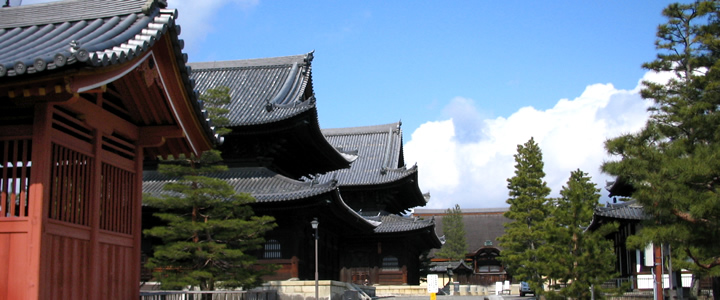
Nanzen-ji Temple is a 3-minute walk, and the Keage Incline, a National Treasure, is next door. The Suirokaku Aqueduct and Tenju-an are a 5-minute walk, Eikan-do 6 minutes, the Philosopher's Path and the Heian Shrine gardens 10 minutes. Blue Bottle Coffee Kyoto is a 1-minute walk. As this is a quiet residential area, there are few convenience stores or casual restaurants, so we recommend planning meals and shopping in advance.
Is there a convenience store nearby?
The nearest convenience store is 7-Eleven Kyoto Heian Jingu-mae on Jingu-michi Street, about 650 m (a 9-minute walk) from the ryokan. Address: 80-1 Okazaki Enshoji-cho, Sakyo-ku, Kyoto. Tel +81-75-771-1701.
Other
Is there a curfew?
No. If you will be returning late at night, please let the front desk know.
Can I smoke?
All guest rooms are non-smoking. Guests in HONKAN Main Building rooms may smoke on the terrace.
Is there a laundry service?
Yes. Please ask the front desk about prices and hours. If you prefer to do your own laundry, the nearest coin laundry is ENEOS Laundry Tennocho, open 24 hours, next to the ENEOS Tennocho service station. It is just west of the Higashi-Tennocho intersection of Shirakawa-dori and Marutamachi-dori (41 Okazaki Higashi-Tennocho, Sakyo-ku, Kyoto).
Can you call a taxi for me?
Yes. If you are catching an early-morning train from Kyoto Station, for example, please let us know in good time.
Can I send luggage ahead of my arrival?
Yes, for staying guests. Please write your name and check-in date on the shipping label.